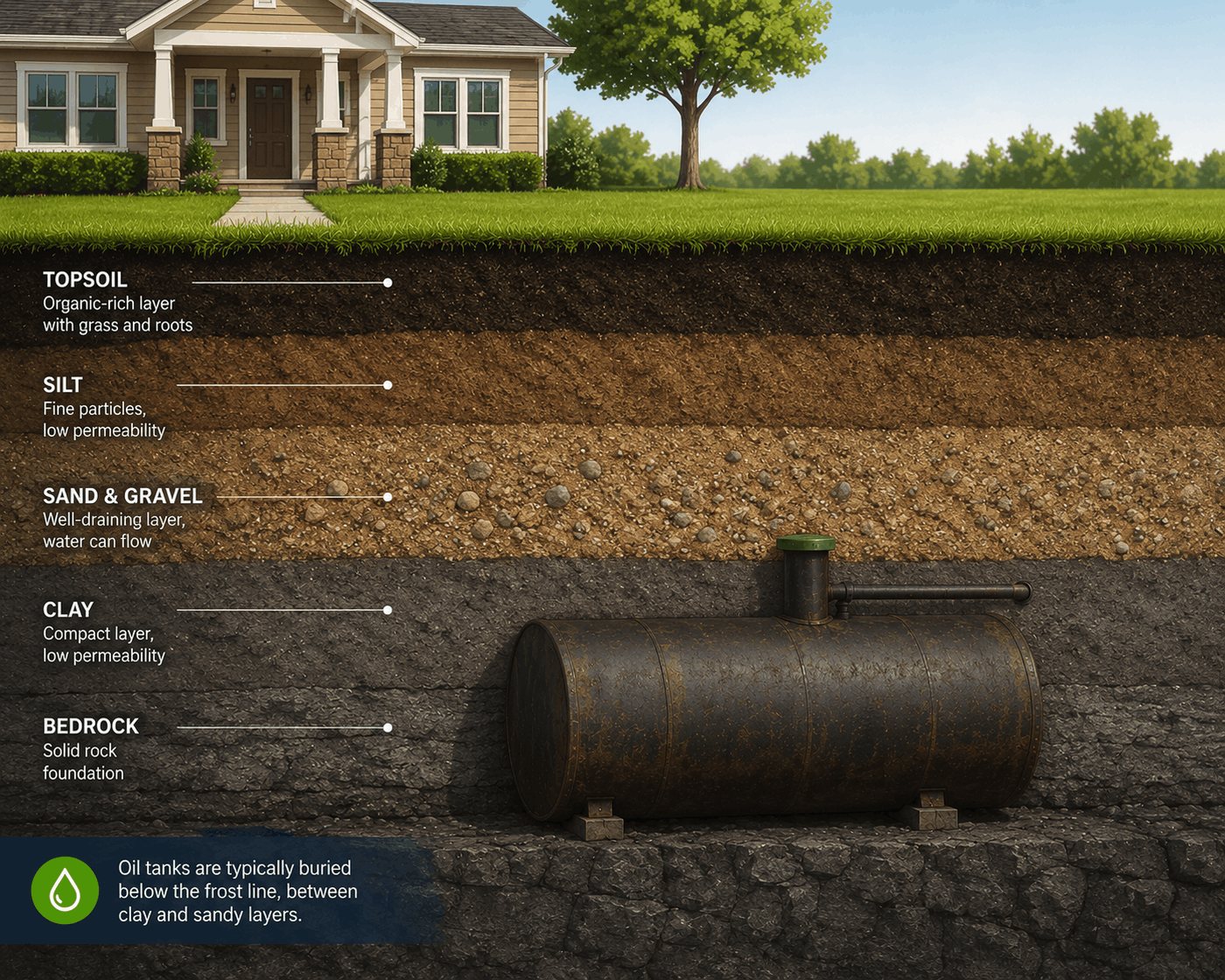
Ground penetrating radar, or GPR, is one of the most powerful tools in a tank locator's kit. It lets us "see" beneath surfaces that block other methods — including steel-reinforced concrete driveways, patios, and walkways.
How GPR works
GPR sends pulses of electromagnetic energy into the ground and measures how they reflect off subsurface objects. Different materials bounce the signal back differently, so a trained technician can interpret the data to identify tank-like anomalies and estimate their depth.
When we reach for GPR
- When a tank may be located beneath a driveway or hardscape.
- To confirm and refine the location of an anomaly found during the initial scan.
- When non-metallic objects or disturbed soil need investigation.
- To reduce the need for exploratory digging.
GPR plus other methods
No single tool is perfect for every property. The best sweeps combine ferromagnetic detection, electromagnetic line tracing, GPR, and rod probing so that the strengths of each method cover the others' blind spots.
How the detection actually works
It's worth slowing down on this point, because it's where most costly mistakes begin. When paved surfaces or additions complicate the scan, ground penetrating radar images the subsurface directly to fill the gaps. A technician reads the basement for capped lines and the exterior walls for fill and vent pipes before a single reading is taken.
A professional sweep combines a subsurface scan of the entire lot with a trained visual inspection of the home and grounds. When paved surfaces or additions complicate the scan, ground penetrating radar images the subsurface directly to fill the gaps. Ask any provider whether the scan covers the whole property and whether ground penetrating radar is included when needed.
What's really at stake
Environmental responsibility attaches to whoever holds title when a release is discovered, even with no prior knowledge of the tank. Most homeowner insurance policies specifically exclude leaking-tank remediation, so the cost typically lands directly on the property owner. Sellers often have no idea a tank exists because it predates their ownership entirely.
Discovering a tank after closing means absorbing the full cost yourself, with no recourse to the seller. A collapsing empty tank can create a dangerous void, which is why even a non-leaking abandoned tank matters. What does this mean in practice?
Why New Jersey properties carry this risk
The state's environmental agency maintains records around tank closure and soil remediation that a file review can surface. New Jersey relied on fuel oil to heat homes for the better part of a century, so older neighborhoods are full of former oil-heat properties. A professional sweep combines a subsurface scan of the entire lot with a trained visual inspection of the home and grounds.
Because conversions happened gradually over decades, two neighboring homes can have entirely different tank histories. Estimates put the number of unknown or undiscovered underground storage tanks across New Jersey well into the six figures. The short version is simple; the useful version takes a paragraph or two.
Putting it into practice
Here's how it plays out on a real property. On the question of “How Ground Penetrating Radar Finds Buried Oil Tanks,” the practical move is the same: If you spot a vent pipe, capped line, or patched driveway, treat it as a reason to scan rather than a verdict on its own. Schedule the sweep inside your inspection contingency window so any finding can be addressed while you still have leverage.
How fast can NJ Oil Tank Scan help with my property?
We cover every town in Northern New Jersey and can often schedule within a day or two, with same-day written reports when a closing date is on the line. Call 973-559-2309 for a free, no-obligation quote and we'll confirm availability for your address.
Have a paved-over yard you're worried about? GPR may be exactly what your property needs. Call 973-559-2309 or request a free quote.